
Penetration testing software for web applications and APIs
Find and validate vulnerabilities across enterprise web applications and APIs with continuous dynamic application security testing and deeper agentic pentesting.
The Invicti platform combines continuous DAST with agentic pentesting and validated, developer-ready findings, helping security teams test more often, investigate deeper, and remediate faster.
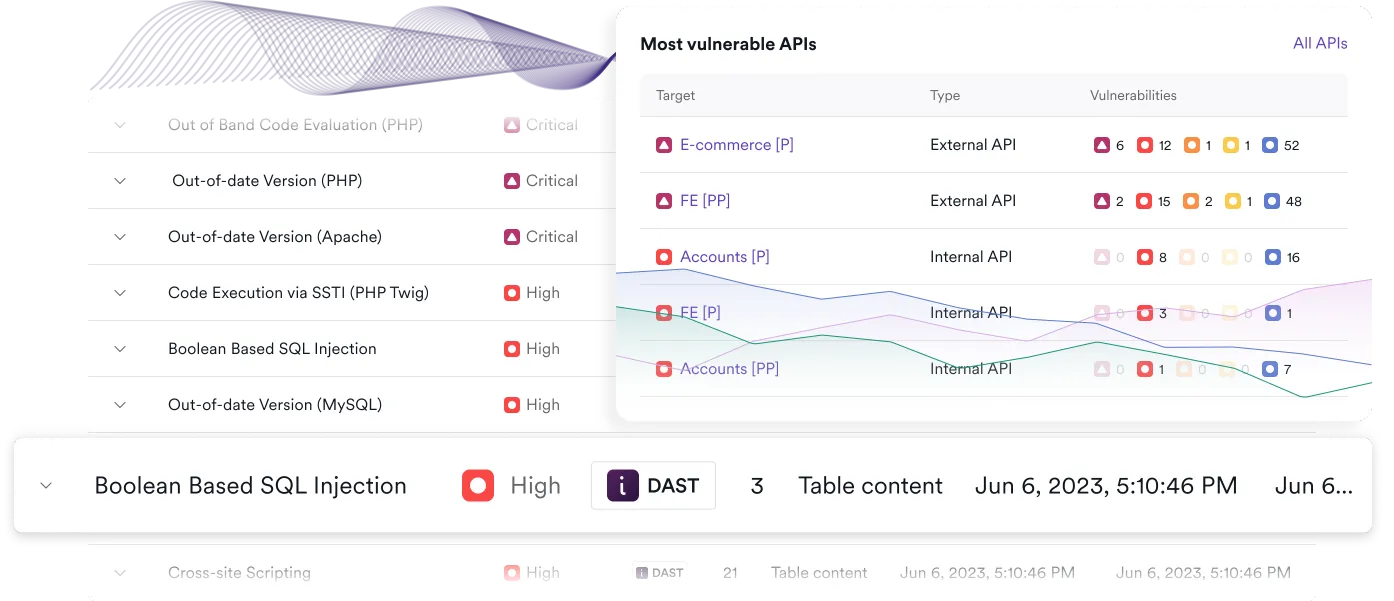

What is penetration testing software?
Penetration testing software helps security professionals find and investigate weaknesses by simulating techniques attackers use against applications, networks, systems, and other assets.
The category ranges from specialist toolkits operated manually by penetration testers to automated scanners and enterprise testing platforms. These tools vary in scope, depth, automation, and the expertise required to use their results.
For web applications and APIs, modern penetration testing software can support:
- Attack-surface discovery and crawling
- Automated vulnerability testing
- Authenticated testing
- API discovery and testing
- Vulnerability validation
- Application-specific investigation
- Reporting and remediation guidance
- Development and security integrations
The right approach depends on what needs testing, how often testing must run, and whether the priority is broad continuous coverage, deeper investigation, or both.
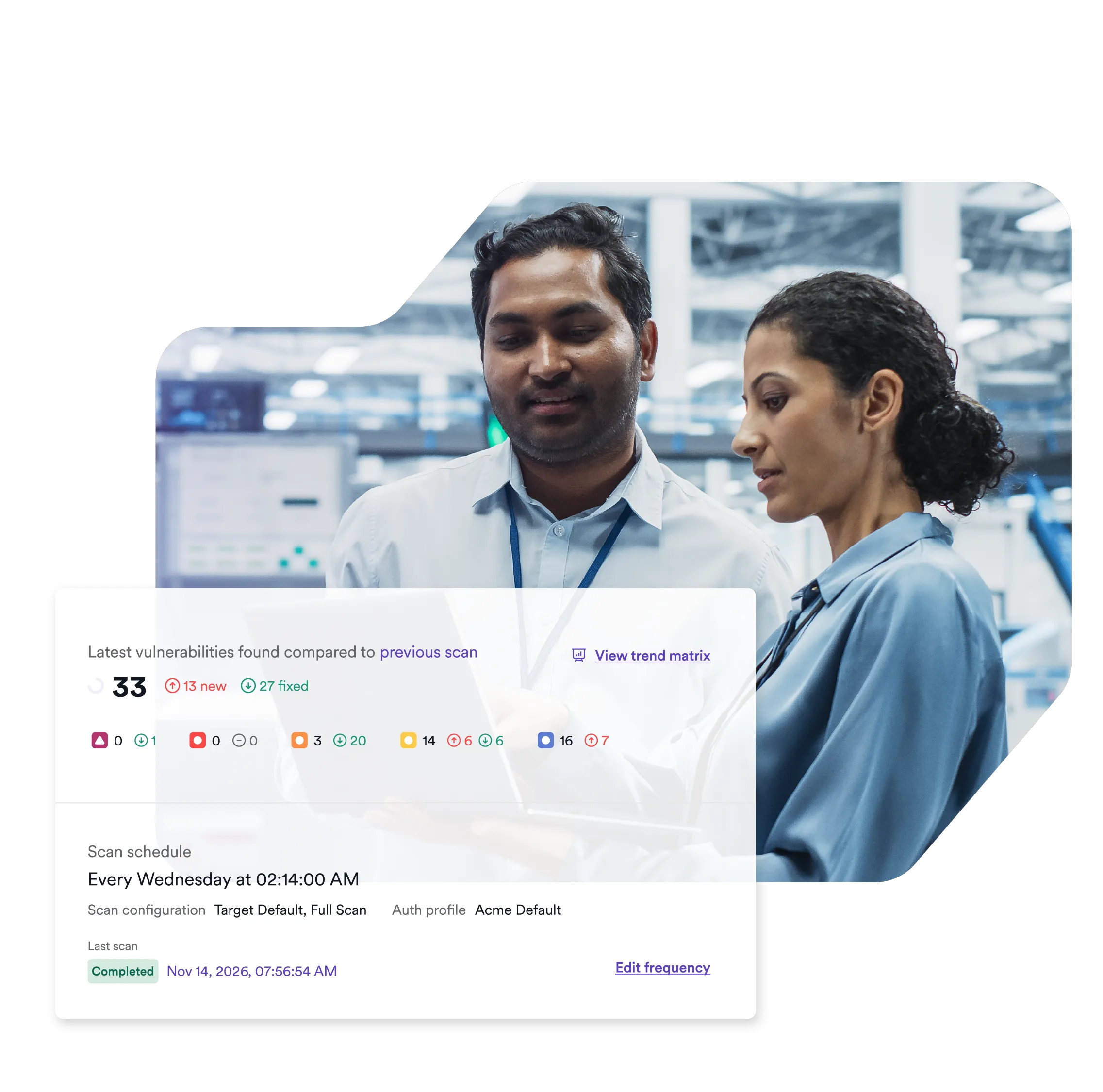
Compare penetration testing approaches
Basic scanners automate individual vulnerability checks. Enterprise dynamic application security testing (DAST) platforms add the crawling, authentication, validation, orchestration, and workflow support needed to run testing across large application portfolios.
These approaches are complementary. Organizations can use DAST for continuous coverage, agentic pentesting for deeper application-specific investigation, and human pentesters where specialist judgment or independent assessment remains necessary.
Scale testing, deepen investigation, and validate results
Invicti combines continuous DAST for broad, repeatable coverage, agentic pentesting for deeper application-specific investigation, and proof-based scanning to confirm many findings with technical evidence. The platform can also ingest findings from manual penetration tests, allowing teams to manage them alongside DAST, agentic, API security, and other application security testing results.
Scale continuous automated testing with Invicti DAST
DAST tests running applications from the outside by sending realistic requests and observing how they respond. Invicti DAST provides the scalable foundation for an enterprise penetration testing program. It helps teams continuously test web applications and APIs for known vulnerability classes without requiring a penetration tester to operate every scan.
Use Invicti DAST to:
- Scan large portfolios of web applications and APIs
- Test authenticated and complex workflows
- Schedule recurring and incremental scans
- Run security testing in development pipelines
- Retest findings after remediation
- Send actionable results to development tools
- Maintain a current view of runtime application risk
DAST does not replace every manual assessment. It automates the broad, repeatable work required to maintain coverage between specialist engagements and across applications that might otherwise receive little regular testing.
Go deeper with agentic pentesting
Traditional automated scanners apply predefined checks at scale. Agentic pentesting adds a deeper layer by using coordinated AI agents to plan and run an application-specific assessment.
Invicti agentic pentesting combines runtime testing with application and technology context. Agents work in parallel, share information, adapt their strategies, and generate checks tailored to the application under assessment. As an agentic pentest runs, the testing process covers several stages:
- Reconnaissance and planning: Invicti maps the application, identifies potential attack points, evaluates technologies and configurations, maintains session context, and prepares a coordinated testing plan.
- Coordinated attack simulation: Specialized agents investigate different vulnerability categories in parallel. They share context and refine their testing as they uncover new information.
- Validation and reporting: Candidate agentic findings are validated before reporting, and duplicate DAST and agentic results are consolidated.
Agentic pentesting provides an additional layer between continuous rule-based scanning and a traditional manual engagement. It is suited to deeper on-demand assessments, application-specific testing, and cases where conventional DAST alone does not provide enough investigative depth.
Validate supported findings with proof-based scanning
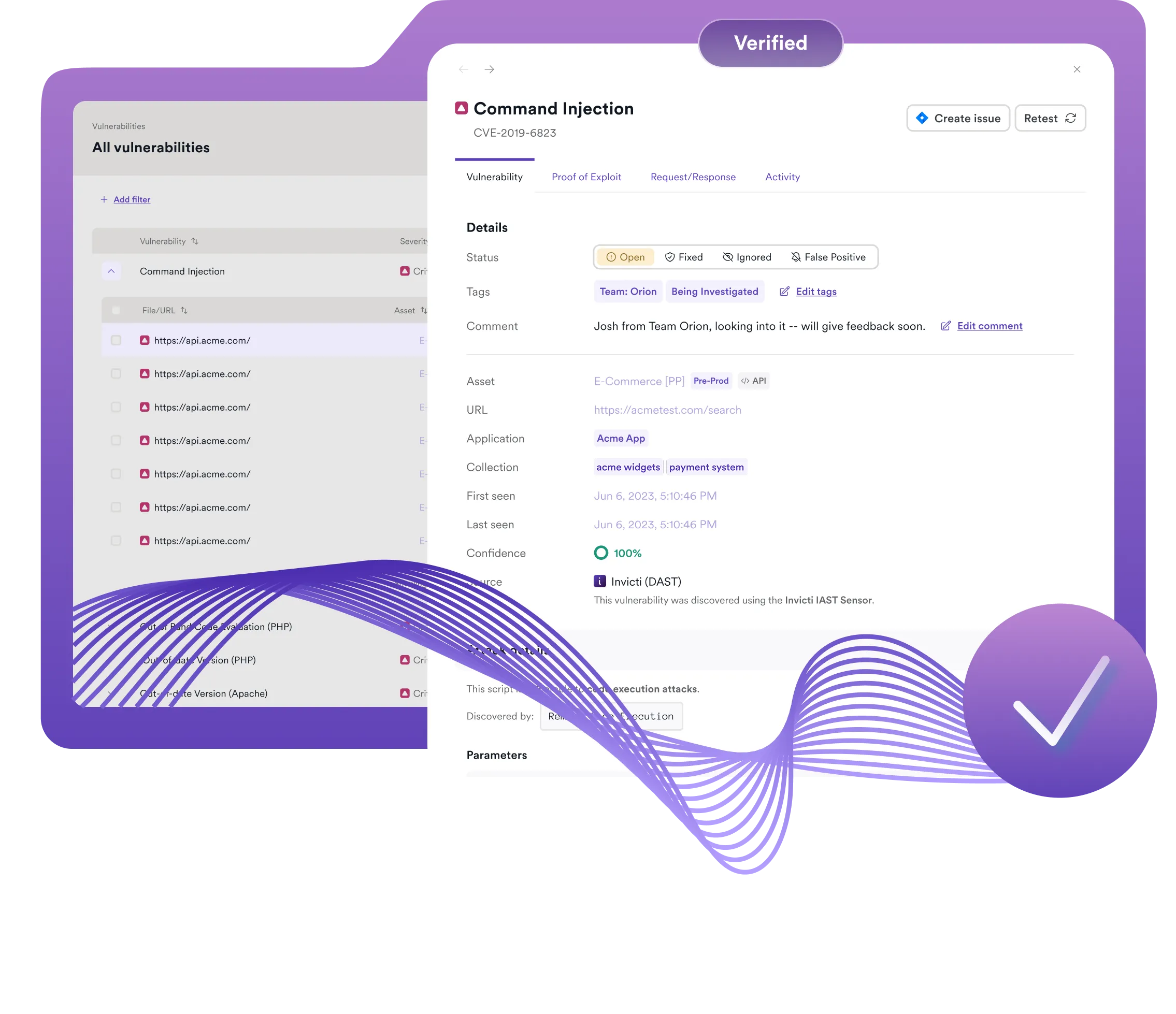
Invicti’s proof-based scanning can safely confirm many vulnerabilities by demonstrating that they are exploitable. For confirmed issues, reports can include technical evidence showing that the vulnerability is real. This reduces the need to reproduce every result manually and gives developers the context they need to begin remediation.
Higher-confidence findings are especially important when automated results flow directly into development workflows. They reduce unnecessary tickets, repeated verification, and disputes between security and development teams.
Not every vulnerability can or should be automatically confirmed. Invicti uses proof-based scanning to confirm supported findings where safe and technically possible and clearly separates confirmed results from findings that still require investigation.
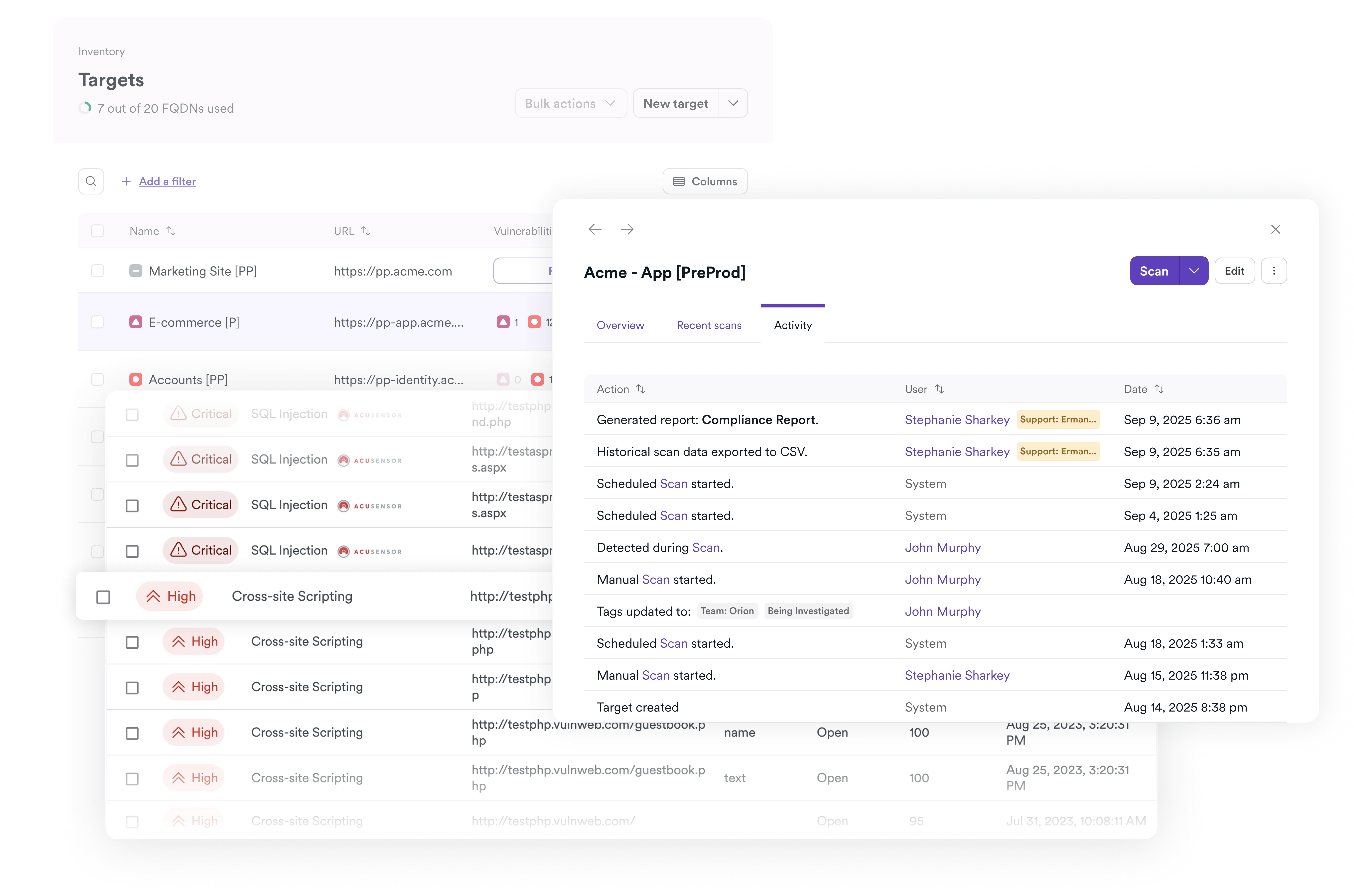
Test web applications and APIs together
APIs expose data and application functionality through interfaces designed for automated access. They can also introduce undocumented endpoints that are difficult to inventory or invisible when testing only the graphical user interface.
Invicti brings API discovery and runtime vulnerability testing into the same platform used for web application security.
Use Invicti to:
- Discover API endpoints associated with web applications
- Import and test supported API definitions
- Test authenticated API endpoints for vulnerabilities and attack paths
- Manage application and API findings in the same remediation workflows
Testing applications and APIs together helps reduce gaps between separate inventories, tools, and security processes.
Explore Invicti’s API security testing
Common enterprise use cases for automated dynamic security testing
- Maintain coverage between deeper assessments: Run recurring scans so application changes do not remain untested until the next specialist engagement.
- Test changes before release: Run targeted DAST scans in pre-production environments and continuous integration and continuous delivery pipelines before deployment.
- Scan production and enterprise portfolios: Test running production environments using carefully configured policies and schedules, while maintaining coverage across large application and API portfolios.
- Investigate critical applications in greater depth: Use agentic pentesting when a conventional scan does not provide enough application context or investigative depth.
- Test APIs and verify fixes: Include API endpoints in security testing and retest vulnerabilities after remediation.
- Support security and compliance programs: Use repeatable testing, technical evidence, and remediation records to support security controls and audit preparation.
Some requirements may still call for independent or human-led penetration testing.
What to look for in enterprise penetration testing software
Attack-surface coverage
A tool can only test the pages, inputs, services, and endpoints it can reach. Look for software that can crawl modern JavaScript-heavy applications, maintain authentication, identify application inputs, and test both user interfaces and APIs.
Repeatable automation
Enterprise testing should support scheduled scans, targeted retesting, and testing in development pipelines. This provides a repeatable security baseline between deeper assessments.
Validation and evidence
Unverified findings increase triage work and make it harder to distinguish confirmed vulnerabilities from issues that still require investigation. Where safe and technically possible, software should validate exploitability and provide technical evidence that helps security teams prioritize and developers remediate.
Workflow integration
A finding has limited value if it cannot reach the people responsible for fixing it. Look for integrations with issue trackers, CI/CD systems, source-code platforms, security orchestration tools, and web application firewalls. Two-way synchronization can help teams track vulnerabilities from discovery through remediation and retesting.
Questions to ask when evaluating an AppSec platform
- Does it test both web applications and APIs?
- Can it crawl modern applications and maintain authentication?
- Which findings can it automatically validate?
- Can it support continuous testing and deeper assessments?
- Can it consolidate automated, agentic, and manual pentest findings in the same risk and remediation workflows?
- Can it scale across the enterprise portfolio?
- Does it integrate with development and security workflows?
- Can it retest vulnerabilities after remediation?
- Does it support the required deployment model?
More findings do not automatically mean better testing. Enterprise teams need broad coverage, reliable evidence, and results that can move into remediation without creating unnecessary work.
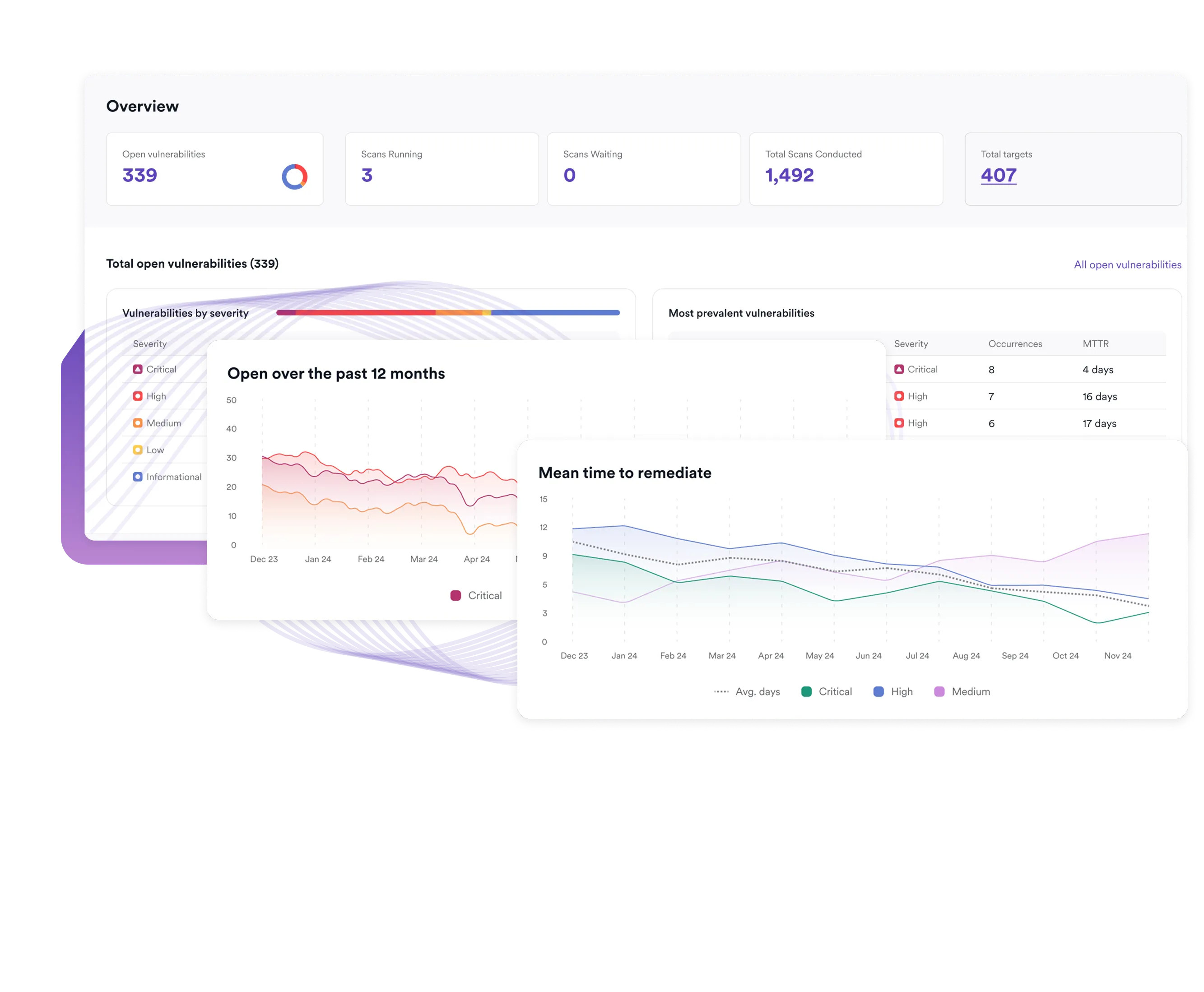
Build continuous testing into your AppSec program
Invicti combines continuous DAST, agentic pentesting, API security, proof-based scanning, and ASPM capabilities in one platform. Maintain broad runtime coverage, go deeper on critical applications, and manage automated and manual findings through shared risk and remediation workflows.
- Read more about the Invicti AppSec Platform.
- Learn how Invicti Agentic Pentest works.
- Request a demo to see continuous AppSec at work.
FAQs about automated penetration testing software
Automated penetration testing software uses predefined security checks, attack techniques, or coordinated automated processes to identify vulnerabilities without requiring a tester to perform every action manually. For web applications and APIs, enterprise DAST platforms can automate crawling, attack simulation, vulnerability detection, validation, reporting, and retesting.
Not fully, but many repeatable parts of web application and API penetration testing can be and frequently are automated, including attack-surface mapping, testing for known vulnerability classes, validating supported findings, and retesting after remediation.
Human expertise remains valuable for assessments involving complex business logic, unusual environments, social engineering, physical security, or specific regulatory requirements. Agentic pentesting adds greater automated depth but does not eliminate every need for specialist judgment.
DAST is a testing methodology that automatically probes running applications for vulnerabilities. Penetration testing is a broader security assessment intended to identify and investigate exploitable weaknesses using manual, automated, or combined testing techniques.
DAST is often one component of a penetration testing toolkit and can also provide continuous automated coverage between manual engagements.
Traditional DAST efficiently applies established security checks across applications and APIs. Agentic pentesting uses coordinated AI agents to prepare an application-specific plan, conduct parallel investigations, adapt testing based on context, and generate tailored checks. Invicti Agentic Pentest combines both approaches so organizations can maintain broad continuous coverage and run deeper assessments when required.
No single approach covers every testing requirement. Automated testing provides repeatability, speed, and enterprise-scale coverage. Agentic pentesting adds deeper application-specific investigation. Human-led testing remains useful when an assessment requires specialist judgment, creativity, or independent validation.
Yes, provided the platform includes dedicated API discovery and testing capabilities. API testing may use imported specifications, recorded traffic, discovered endpoints, authentication information, and direct testing of API requests. Buyers should confirm which API formats, authentication methods, and discovery techniques a platform supports.
Invicti uses proof-based scanning to safely confirm many vulnerabilities and provide evidence that they are exploitable. Results that cannot be automatically confirmed may still require review, but confirmed findings give teams a higher-confidence starting point for prioritization and remediation.
